
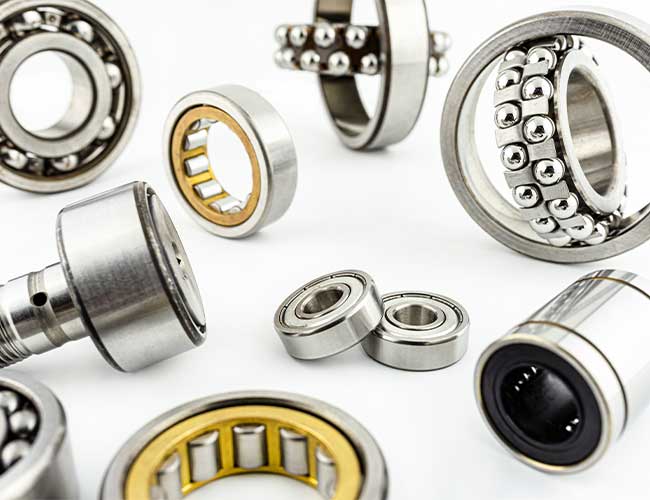
The global bearing industry remains a cornerstone of modern mechanical systems, ensuring smooth operation, reducing friction, and supporting rotational motion across multiple sectors. In 2025, the industry faces a pivotal period marked by technological advancements, rising demand from emerging sectors, and evolving global economic pressures. Bearings, often invisible components in complex machinery, are now recognized for their strategic role in efficiency, sustainability, and innovation.
Global Market Overview
The bearing market has demonstrated steady growth over the past decade, with increasing demand in automotive, industrial machinery, renewable energy, and aerospace applications. In 2024, the global market was valued at approximately $58 billion, with projections suggesting a rise to $140 billion by 2034, reflecting a compound annual growth rate (CAGR) of about 9%.
The Asia-Pacific region continues to dominate production and consumption, with China, Japan, and India leading the charge. China alone accounts for nearly half of the global market share due to its extensive manufacturing base, growing automotive sector, and large-scale infrastructure projects. Europe and North America, though smaller in volume, emphasize high-precision, specialty bearings used in aerospace, defense, and advanced manufacturing sectors.
Market demand is increasingly driven by electric vehicles (EVs), renewable energy systems, smart manufacturing, and robotics. Traditional internal combustion engine vehicle bearings remain relevant but exhibit slower growth compared to high-tech applications, particularly in high-speed motors and precision machinery.
Technological Advancements
Innovation has become a key differentiator in the bearing industry. Hybrid ceramic bearings, which combine steel rings with ceramic balls, offer higher speed, lower weight, and longer service life. Meanwhile, intelligent bearings equipped with sensors provide real-time monitoring of vibration, temperature, and load. These “smart” bearings enable predictive maintenance, minimizing unplanned downtime and enhancing operational efficiency.
Material science is playing an increasingly important role. Advanced surface coatings, low-friction lubricants, and composite materials, including graphene-enhanced bearings, are extending lifespan and performance. Bearings are now expected to operate under higher loads, at faster speeds, and in more extreme environments than ever before.
Industry Applications
Bearings are indispensable across industries, from automotive and industrial machinery to renewable energy and robotics. In the automotive sector, EV adoption has accelerated demand for bearings capable of sustaining high-speed rotation while minimizing friction and heat generation. Bearings are critical components in electric motors, wheel hubs, gearboxes, and regenerative braking systems, enhancing energy efficiency and vehicle longevity.
Renewable energy applications, particularly wind turbines and solar tracking systems, require bearings capable of handling heavy loads, variable speeds, and harsh environmental conditions. Large spherical roller bearings in wind turbines support rotor shafts, withstand axial and radial forces, and endure extreme weather conditions.
Automation and smart manufacturing have further emphasized the importance of precision bearings. Robotics, CNC machines, and automated production lines rely on low-friction, high-accuracy bearings to maintain performance, safety, and energy efficiency. Intelligent bearings integrated with predictive maintenance capabilities are becoming essential to reduce operational costs and prevent unexpected failures.
Industry Challenges
Despite the growth opportunities, the bearing industry faces several challenges. Raw material price volatility, particularly in steel, specialty alloys, and ceramic materials, affects production costs and profit margins. Supply chain disruptions, driven by geopolitical uncertainty and the regionalization of manufacturing, have added complexity to global operations.
Competition in low- and mid-range bearings remains intense, with price pressures and counterfeit products threatening both market share and brand integrity. Conversely, high-performance bearings require substantial R&D investments and advanced manufacturing processes, creating barriers for smaller players.
Manufacturers also face rising expectations for durability, energy efficiency, and intelligent capabilities. Balancing the cost of materials, innovation, and advanced production techniques with competitive pricing is an ongoing challenge.
Leading Companies and Market Dynamics
Global leaders such as SKF, Timken, NSK, and Schaeffler continue to dominate the market by leveraging advanced technology, quality control, and global supply networks. These companies invest heavily in smart bearings, predictive maintenance solutions, and sustainable manufacturing practices to maintain competitive advantages.
Emerging manufacturers from China, India, and Eastern Europe are expanding their presence, particularly in standard and mid-range bearings. Improvements in precision engineering, quality management, and after-sales support are allowing these companies to increase competitiveness in global markets.
Future Outlook
Looking ahead, three key trends are expected to shape the global bearing industry:
- Technological Innovation: The development of smart bearings, hybrid materials, and advanced lubrication systems will drive growth in EVs, robotics, renewable energy, and aerospace applications.
- Sustainability and Service-Oriented Solutions: Environmentally responsible manufacturing, predictive maintenance, and lifecycle management will become essential. Companies that provide energy-efficient, long-lasting, and service-oriented solutions will gain competitive advantages.
- Global Supply Chain Adaptation: Manufacturers must navigate evolving trade policies, raw material availability, and regional production strategies to ensure resilience and efficiency.
Companies that successfully integrate innovation, sustainability, and intelligent solutions are likely to lead the industry, while those relying solely on cost-competitive production may face increased pressure.
Conclusion
The bearing industry in 2025 is at a transformative stage, balancing traditional manufacturing with emerging technological demands. Growing requirements from EVs, renewable energy, automation, and precision industries position bearings as critical enablers of efficiency, reliability, and innovation. Companies that embrace advanced materials, smart technologies, and sustainable practices are poised to define the future of this essential industry, driving growth and maintaining competitiveness in a rapidly evolving global market.